By Kevin Liptak
更新于1小时31分钟前
最后更新于2026年2月28日,美国东部时间凌晨5:28
发布于2026年2月28日,美国东部时间凌晨4:24
中东 唐纳德·特朗普
[查看全部主题]
Facebook TweetEmailLink Threads
链接已复制!
美国总统唐纳德·特朗普周五在佛罗里达州西棕榈滩国际机场下飞机后挥拳。
Elizabeth Frantz/路透社
美国总统唐纳德·特朗普宣布对伊朗发动一场“大规模且持续进行”的军事行动,并明确呼吁伊朗民众摆脱其压迫性政权,这凸显了他对地缘政治风险的新胃口,也使他的总统任期陷入更深的不确定性。
“美国军方正在开展一场大规模且持续的行动,以阻止这个极其邪恶、激进的独裁政权威胁美国及其核心国家安全利益,”他在周六凌晨发布于“真实社交”(Truth Social)的视频中说道,视频中他明确承认美军在此次行动中可能会有人员伤亡。
这段长达八分钟的视频揭示了总统在伊朗问题上一直不清晰的目标,以及潜在的严重后果。尽管对于取代伊朗政权的可能性存在巨大不确定性,且仅靠空中力量推翻他国领导人的历史案例寥寥无几,特朗普似乎仍有望通过这次大规模空中军事行动成功促成伊朗政权更迭。
“他们拒绝任何放弃核野心的机会,我们不能再容忍了,”特朗普说道。一名美国官员称,特朗普正从海湖庄园持续监控此次打击行动。
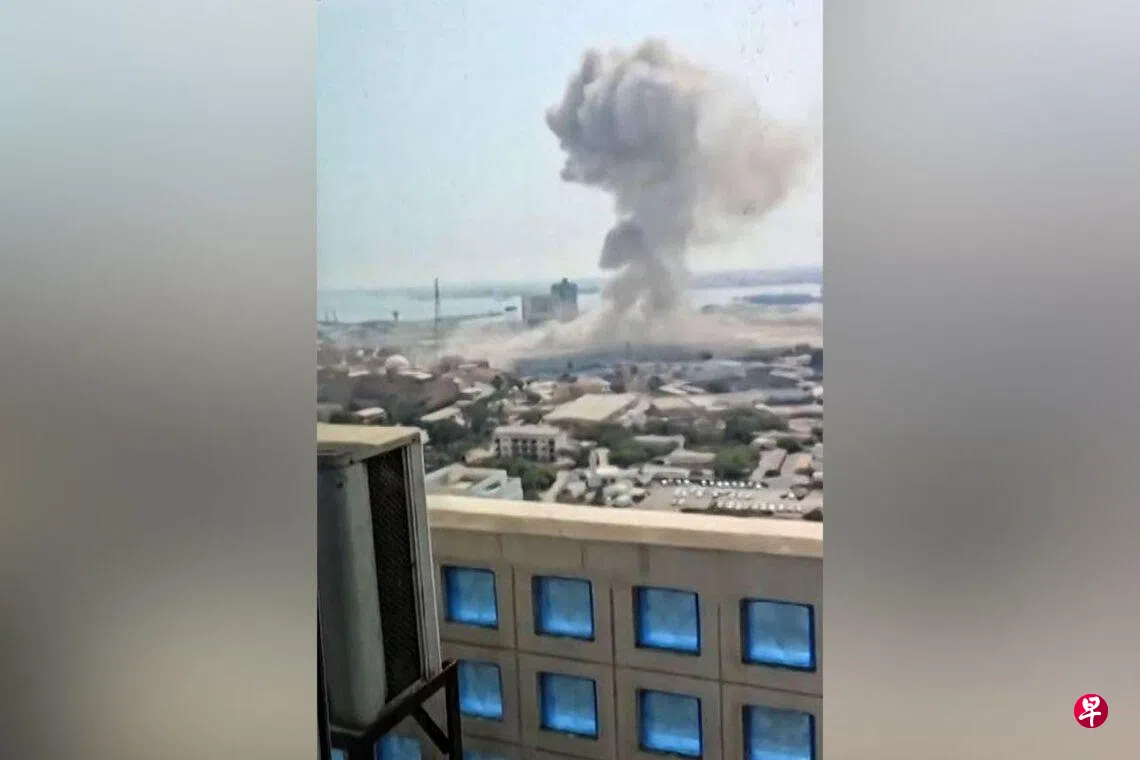
经过数周的深思熟虑,以及其特使试图达成一项迫使伊朗放弃长期红线的快速外交协议未果后,总统做出了此决定。两名消息人士告诉美国有线电视新闻网(CNN),美军正计划进行数天的攻击,而伊朗已在中东地区展开报复,包括袭击美军第五舰队所在地——巴林的美国海军基地,一名美国官员表示。
特朗普甚至在周二的国情咨文演讲中,也从未充分公开阐述其发动战争的理由,尽管发动战争在国内是一个政治上危险的举措,尤其是对于一位以结束对外纠缠为竞选口号的总统而言。周六,他指出了美国民众生命可能面临的潜在代价。
“伊朗政权妄图杀戮。勇敢的美国英雄的生命可能会失去,我们可能会有伤亡——这在战争中时有发生——但我们这么做不是为了现在,而是为了未来,这是一项崇高的使命,”总统说道,“我们采取了一切可能的步骤来减少在该地区美军人员的风险。”
对于特朗普的许多盟友而言,军事行动似乎早已不可避免。今年年初,他曾告诉伊朗抗议者,他会支持他们,并警告美国“整装待发”准备发动攻击,之后他觉得有义务执行自己设定的红线。
“当我们完成这一切后,接管你们的政府!那将是你们的政府。这可能是下几代人唯一的机会,”特朗普在视频中对伊朗人民说道。
“多年来,你们一直请求美国的帮助,但从未得到。没有一位总统愿意做我今晚愿意做的事情。现在你们有了一位给你们想要的东西的总统,所以让我们看看你们会如何回应。”
特朗普在重返总统职位后第二次对伊朗发起打击,其动机在大部分简短、非正式的公开言论中有所转变,从保护抗议者逐渐转变为遏制伊朗核野心,最终目标演变为推翻伊朗政权。他还提及了伊朗的导弹库以及对真主党、哈马斯等地区代理组织的不稳定支持。
美军与以色列的最新军事行动如何推进这些目标中的全部或部分,还有待观察。总统对行动后果的预期也尚不明确。
在打击行动展开前的幕后谈判中,官员们在一系列不完善的选项中挣扎,所有选项都未达到特朗普1月下令在加拉加斯抓捕委内瑞拉领导人尼古拉斯·马杜罗那次决定性任务的程度。美国情报机构不确定,如果伊朗高层被清除,谁会取而代之。
军方官员还警告总统行动将面临报复的巨大风险。目前部署在中东的数千名美军现在可能成为伊朗报复行动的目标。
在过去几周紧张的 Situation Room(情况室)会议中,特朗普和高级官员向包括参谋长联席会议主席丹·凯恩将军在内的五角大楼高层反复询问每个选项的成功可能性。尽管特朗普下令在中东进行大规模军事集结,但答案往往模棱两可。
在打击行动前的模糊公开言论中,特朗普发出了美国情报机构未曾支持的威胁,包括声称伊朗很快将拥有可打击美国的导弹。
“他们应该达成协议,但他们不想做得足够彻底,”周五他在得克萨斯州停留时说道,“他们不想说关键的话:‘我们不会拥有核武器。’”
但如果伊朗仅靠言语就足以避免冲突,那这个障碍早已被扫清。该国多次表示,包括本周,其并不追求核武器。
有许多理由质疑这一说法,包括伊朗此前将铀浓缩至接近武器级。但特朗普强调仅以伊朗的口头承诺为达成协议的条件,这似乎引发了更多疑问:他究竟在与伊朗领导人的协议中追求什么?
尽管一些高级官员警告称伊朗难以谈判,特朗普仍允许外交继续推进。有人质疑伊朗最高领袖(拥有最终决策权)是否会同意特朗普的任何条件,即便他的谈判代表似乎更愿意进行谈判。
特朗普圈内的许多人鼓励他寻求交易。其特使史蒂夫·维特科夫和贾里德·库什纳与伊朗进行了三轮间接谈判,他们怀着谨慎的成功希望进入谈判。
但其他人则较为悲观。共和党参议员林赛·格雷厄姆公开嘲笑伊朗提出的某些让步。以色列总理本杰明·内塔尼亚胡本月紧急访问华盛顿时表示,此时可能是打击伊朗的最佳时机。
总体而言,特朗普在其身边人看来一直对将国家拖入战争心存疑虑,他更青睐一种能被宣传为比他退出的奥巴马-era核协议更强硬的外交成果。但他急于达成协议,设置了未能达成所期望让步的短期时间表。
在下令发动打击时,特朗普克服了其军事顾问警告的不确定性,以及可能引发伊朗大规模报复的疑虑。
此次军事行动(继去年6月针对伊朗核设施的有限打击之后)对于其支持者一直反对对外战争的总统而言,带来了重大政治风险。在第二任期内,特朗普已动用美军在六个以上国家进行军事打击。此次行动将持续多久、代价多少(无论金钱还是生命)都尚不明确。
周二的国情咨文演讲中,副总统JD Vance——他此前曾警告过不要在目的不明的情况下向美军派遣士兵——在接受《华盛顿邮报》采访时(注:此处应为“本周”)表示,美国任何在伊朗的行动都不会引发类似伊拉克或阿富汗战争的长期冲突。
“我认为我们必须避免重蹈历史错误,但我也认为我们不能过度吸取历史教训,”他对《华盛顿邮报》说道,“仅仅因为一位总统搞砸了一次军事冲突,并不意味着我们永远不应再参与军事行动。我们必须谨慎行事,但我认为总统正在小心处理。”
特朗普在周五(注:应为周六)的评估中承认了长期冲突的风险:“我猜你可以说总有风险。当有战争时,任何事情都有风险,好的坏的都有。”
本文已更新以包含更多最新动态。
中东 唐纳德·特朗普
[查看全部主题]
Facebook TweetEmailLink Threads
链接已复制!
Trump deliberated on Iran for weeks. His ‘massive and ongoing’ operation comes with acknowledgment US lives could be lost
By Kevin Liptak
Updated 1 hr 31 min ago
Updated Feb 28, 2026, 5:28 AM ET
PUBLISHED Feb 28, 2026, 4:24 AM ET
The Middle East Donald Trump
[See all topics]
Facebook TweetEmailLink Threads
Link Copied!
US President Donald Trump pumps his fist after disembarking Air Force One at Palm Beach International Airport in West Palm Beach, Florida, on Friday.
Elizabeth Frantz/Reuters
President Donald Trump’s announcement of a “massive and ongoing” US military campaign against Iran — and his explicit call for the country’s citizens to shake off their oppressive leadership — put on display his fresh appetite for geopolitical risk and thrust his presidency into a deeper period of uncertainty.
“The United States military is undertaking a massive and ongoing operation to prevent this very wicked, radical dictatorship from threatening America and our core national security interests,” he said of Iran in a video posted to Truth Social early Saturday morning, in which he starkly acknowledged that US lives may be lost in the operation.
The eight-minute recording laid bare both the president’s objectives in Iran — which had been unclear — and the potential for dire consequences. Trump appears hopeful his major air operation can successfully result in a change in Iran’s regime, despite the vast uncertainties about what might replace it and the limited historical examples of air power alone ousting a country’s leader.
“They rejected every opportunity to renounce their nuclear ambitions, and we can’t take it anymore,” said Trump, who a US official said is continuing to monitor the strikes from Mar-a-Lago.
The president reached his decision after weeks of deliberation and an attempt by his envoys to strike a rapid diplomatic agreement that would have forced Iran to abandon long-held red lines. The US military is planning for several days of attacks, two sources told CNN, and Iran has already retaliated across the Middle East, including targeting the US Navy base in Bahrain that is home to the Fifth Fleet, a US official said.
Trump never fully publicly laid out his case for war, even during his State of the Union address on Tuesday, despite strikes being a politically perilous move at home, especially for a president who campaigned on ending foreign entanglements. He noted on Saturday the potential cost to American lives.
“The Iranian regime seeks to kill. The lives of courageous American heroes may be lost and we may have casualties — that often happens in war — but we’re doing this not for now. We’re doing this for the future, and it is a noble mission,” the president said, adding that US had “taken every possible step to minimize the risk to US personnel in the region.”
To many of Trump’s allies, military action had long appeared inevitable. After telling Iranian protesters at the start of the year that he would come to their support, warning the US was “locked and loaded” to attack, he felt obligated to enforce his red line.
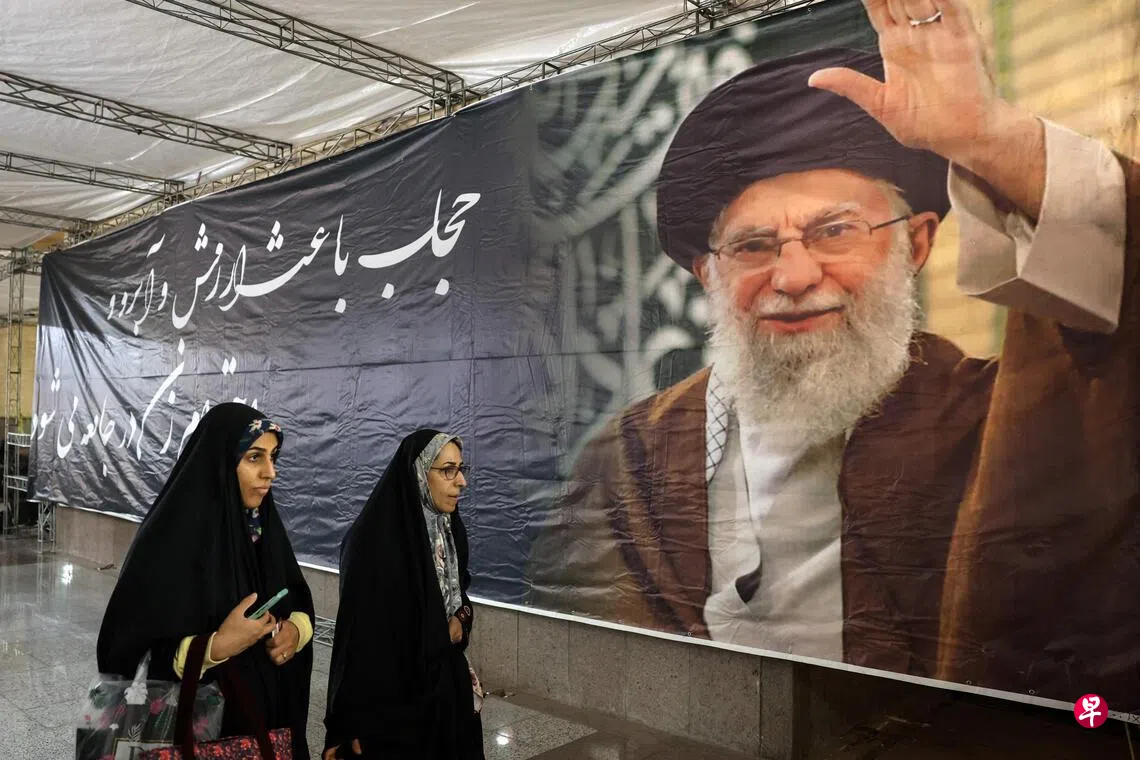
“When we are finished, take over your government. It will be yours to take. This will be probably your only chance for generations,” Trump told the Iranian people in his video.
“For many years, you have asked for America’s help, but you never got it. No president was willing to do what I am willing to do tonight. Now you have a president who is giving you what you want, so let’s see how you respond,” he said.
Trump’s motivations for his second set of strikes within Iran since returning to office — conveyed mostly in curt, off-hand public remarks — appeared to shift over time, moving from protecting protesters to curbing Iran’s nuclear ambitions to ousting the Iranian regime. He’s also cited Iran’s arsenal of missiles and destabilizing support for regional proxy groups, like Hezbollah and Hamas.
How the latest military action from both the US and Israel advances all, or any, of those objectives remains to be seen. Nor was it clear what the president has been told to expect in the aftermath.
Behind the scenes ahead of the strikes, officials wrestled with a slate of imperfect options that all stopped short of a decisive mission like the one Trump ordered in January to capture Venezuelan leader Nicolás Maduro in Caracas. US intelligence is uncertain on who would replace Iran’s senior leaders if they are taken out.
Military officials have also warned the president about the steep risks for retaliation. Thousands of American troops based in the Middle East could now potentially be targets for Iran as it carries out promised reprisals.
During intense Situation Room meetings over the last several weeks, Trump and senior officials peppered top Pentagon brass, including Gen. Dan Caine, the chairman of the Joint Chiefs of Staff, with questions about each options’ likelihood of success. The answers were often inconclusive, even as Trump ordered a massive military buildup in the Middle East.
In his vague public remarks leading up to the strikes, Trump issued threats not backed by US intelligence — including that Iran would soon have a missile that can hit the US.
“They should make a deal, but they don’t want to quite go far enough,” he said Friday during a stop in Texas. “They don’t want to say the key words: ‘We’re not going to have a nuclear weapon.’”
Yet if Iran’s words alone were the bar for avoiding conflict, the hurdle had already been cleared. The country has repeatedly said it is not pursuing nuclear weapons, including this week.
There are many reasons to question that claim, including Iran’s previous enrichment of uranium to near-weapons grade. But Trump’s emphasis on the country’s words alone only seemed to raise more questions about what, precisely, he was looking for in a deal with the country’s leaders.
He allowed diplomacy to proceed, despite warnings from some senior officials that Iran was notoriously difficult to negotiate with. Some questioned whether Iran’s Supreme Leader, who has ultimate sign-off, would agree to any of Trump’s terms — even if his negotiators seemed more willing to negotiate.
Many inside Trump’s orbit encouraged him to pursue a deal. His envoys Steve Witkoff and Jared Kushner, who engaged in three rounds of indirect talks with the Iranians, entered the discussions with guarded hopes for success.
But others were less encouraging. GOP Sen. Lindsey Graham publicly scoffed at some reported concessions offered by the Iranians. And Israeli Prime Minister Benjamin Netanyahu, in an urgent visit to Washington this month, said there would unlikely be a more opportune moment to strike Iran.
Throughout, Trump had appeared to people around him wary of taking the country to war, far preferring a diplomatic outcome that he could sell as stronger than the Obama-era nuclear deal he withdrew from. But he was impatient for an agreement, setting short timelines that did not yield the concessions he was seeking from Tehran.
In ordering the strikes, Trump overcame certain misgivings at launching an operation his military advisers warned could have an uncertain outcome and could prompt outsized retaliation by Tehran.
And the new operation — which follows limited US strikes on Iran’s nuclear facilities last June — poses significant political risk for a president whose base has opposed foreign wars. In all, Trump has used the US military to target sites in more than than a half-dozen countries in his second term. It’s not clear how long this operation may last or cost, either in terms of money or lives.
In an interview this week, Vice President JD Vance — who has previously warned about sending US troops into harm’s way for uncertain purposes — suggested any operation in Iran would not result in a prolonged conflict akin to the wars in Iraq or Afghanistan.
“I do think we have to avoid repeating the mistakes of the past. I also think that we have to avoid overlearning the lessons of the past,” he told the Washington Post. “Just because one president screwed up a military conflict doesn’t mean we can never engage in military conflict again. We’ve got to be careful about it, but I think the president is being careful.”
Trump acknowledged the risk of a prolonged conflict in his own assessment on Friday. “I guess you could say there’s always a risk. You know, when there’s war, there’s a risk in anything, both good and bad.”
This story has been updated with additional developments.
The Middle East Donald Trump
[See all topics]
Facebook TweetEmailLink Threads
Link Copied!