2026年2月28日 / 美国东部时间上午10:27 / CBS新闻
美国的盟友和对手对美国和以色列联合袭击伊朗的行动作出反应,一些美国的亲密伙伴将局势描述为“严重”和“危险”。
以下是对周六伊朗与美国及其在中东最亲密盟友之间爆发冲突的最新反应。
欧盟
欧盟委员会主席乌尔苏拉·冯德莱恩称伊朗的“事态发展”“令人高度关切”。
她强调了欧盟对伊朗政权及其革命卫队实施的制裁,称“确保核安全并防止任何可能进一步升级紧张局势或破坏全球防扩散机制的行动至关重要。”
但她也表示,欧盟“一直推动通过谈判解决核和弹道计划的外交努力”。
“我们呼吁所有各方最大限度克制,保护平民,并充分尊重国际法,”冯德莱恩表示。
欧盟外交与安全政策高级代表卡娅·卡拉斯表示,她已与以色列外交部长以及该地区其他官员进行了交谈,并表示“欧盟也在与阿拉伯伙伴密切协调,探索外交途径。保护平民和遵守国际人道主义法是当务之急。”
她说,欧盟在红海的海军任务正处于高度戒备状态,随时准备帮助保持海上走廊畅通。
联合国
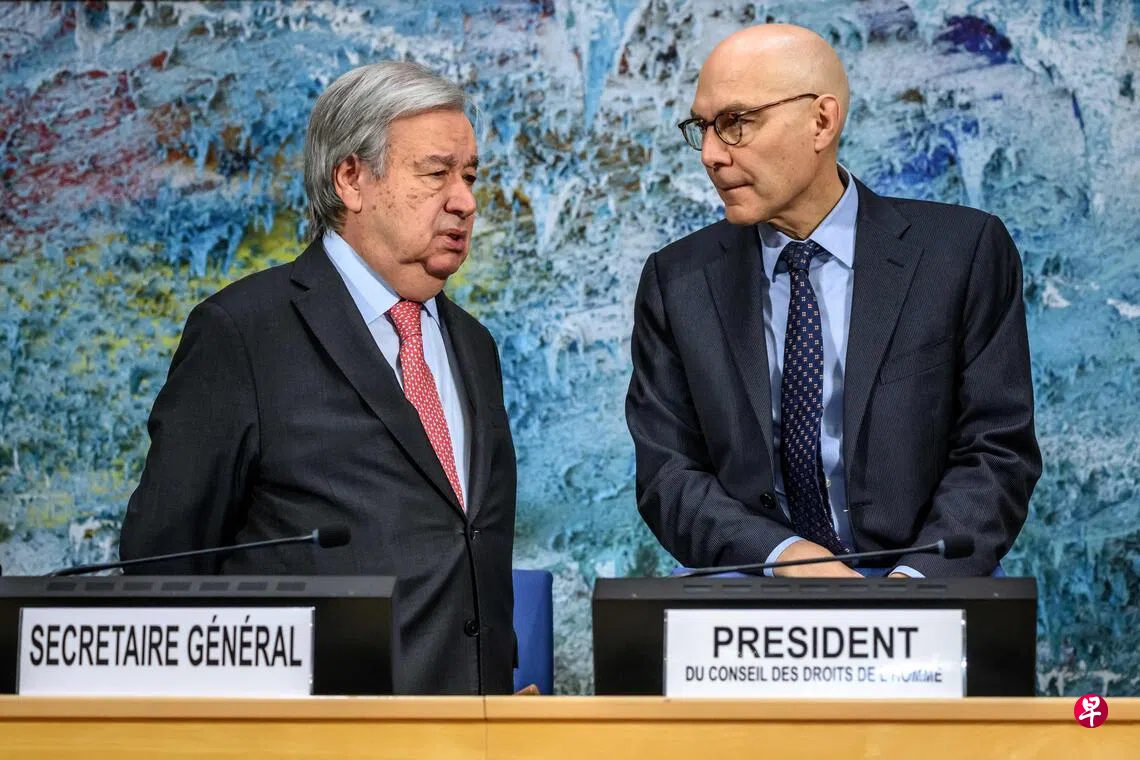
联合国秘书长安东尼奥·古特雷斯谴责“中东今天的军事升级”,称相关行动和伊朗的回应破坏了“国际和平与安全”。
“我呼吁立即停止敌对行动并降级局势,”古特雷斯表示。“否则将面临更大范围的地区冲突,对平民和地区稳定造成严重后果。我强烈鼓励所有各方立即回到谈判桌前。”
古特雷斯还强调,联合国成员国“必须遵守国际法义务”,包括《联合国宪章》,该宪章禁止“对任何国家的领土完整或政治独立使用武力威胁或使用武力,或以任何其他与联合国宗旨不符的方式行事。”
联合国安理会定于周六下午4点在其纽约总部召开紧急会议。
俄罗斯
俄罗斯谴责美国和以色列对伊朗的打击。
俄罗斯外交部在声明中称:“华盛顿和特拉维夫再次踏上危险道路,迅速将该地区推向人道主义、经济乃至可能的放射性灾难。”
“近几个月来,美国政府持续系统性地破坏国际法律秩序的基本原则,这尤其令人关切,”外交部表示。“我们呼吁立即回到政治和外交轨道。”
英国
英国政府发言人表示:“伊朗绝不能被允许发展核武器,这就是我们不断支持通过谈判达成解决方案的原因。”
发言人补充说,英国没有参与美以对伊朗的袭击,英国首相基尔·斯塔默当天晚些时候将主持部长紧急会议,并表示英国“准备保护其在该地区的利益,我们不希望看到进一步升级为更广泛的地区冲突。”
法国
法国总统埃马纽埃尔·马克龙表示,“美国、以色列和伊朗之间爆发战争将对国际和平与安全造成严重后果。”
马克龙称法国“准备在必要时部署资源保护其伙伴”。
“持续升级对所有人都危险,必须停止。伊朗政权必须明白,它别无选择,只能本着诚意参与谈判,结束其核和弹道计划以及地区破坏行动。这对中东所有人的安全至关重要。伊朗人民也必须能够自由地建设未来。伊斯兰政权犯下的屠杀使它失去合法性,必须让人民重新发声,越快越好。”马克龙表示。
加拿大
加拿大总理马克·卡尼称,“伊朗伊斯兰共和国是整个中东不稳定和恐怖主义的主要来源,拥有全球最糟糕的人权记录之一,绝不能被允许获得或发展核武器。”
卡尼表示,加拿大“支持美国采取行动防止伊朗获得核武器,防止其政权进一步威胁国际和平与安全。”
阿曼
阿曼外交大臣巴德尔·布萨伊迪(正在美国与伊朗关于核计划的谈判中担任调解人)表示自己“感到沮丧”。
“积极认真的谈判再次遭到破坏,”布萨伊迪说。“这既不符合美国的利益,也不利于全球和平事业。我为将遭受苦难的无辜者祈祷。我敦促美国不要进一步卷入,这不是你们的战争。”
科威特
科威特是伊朗瞄准的美国主要空军基地所在地,该国谴责“令人发指的伊朗袭击”,称有权“为回应这种公然侵略采取相应措施,根据这种侵犯的规模和性质,按照国际法,采取一切必要措施保护其领土、人民和居民,同时确保主权、安全和稳定。”
卡塔尔
卡塔尔拥有美国在中东最大的军事基地,该基地也遭到伊朗袭击。卡塔尔称这些打击“公然侵犯其国家主权,直接攻击其安全和领土安全,是不可接受的升级,威胁该地区的安全与稳定。”
卡塔尔外交部在声明中表示:“外交部强调,卡塔尔国一直并仍然是首先呼吁与伊朗伊斯兰共和国对话的国家之一,并倡导继续以这一原则为基础,通过和平方式解决分歧和争端,从而避免该地区面临升级风险。”
卡塔尔呼吁“立即停止任何升级行动,回到对话桌前,优先考虑理性和智慧的语言,努力以保护地区安全、维护各国人民利益、防止滑向更广泛对抗的方式控制危机。”
As the U.S. and Israel attack Iran, governments around the world stress risks of new war in the Middle East
February 28, 2026 / 10:27 AM EST / CBS News
U.S. allies and adversaries responded to the joint attacks by the U.S. and Israel on Iran, with some of America’s close partners describing the situation as “grave” and “perilous.”
Below is a look at the latest reaction to the conflict that erupted Saturday between Iran and the U.S. and its closest ally in the Middle East.
European Union
The President of the European Commission, Ursula von der Leyen, called the “developments” in Iran “greatly concerning.”
She highlighted EU sanctions against Iran’s regime and its Revolutionary Guards, because she said “ensuring nuclear safety and preventing any actions that could further escalate tensions or undermine the global non-proliferation regime is of critical importance.”
But she also said the EU has “consistently promoted diplomatic efforts aimed at addressing the nuclear and ballistic programmes through a negotiated solution.”
“We call on all parties to exercise maximum restraint, to protect civilians, and to fully respect international law,” Von der Leyen said.
Kaja Kallas, the EU high representative for foreign affairs and security policy, said she has spoken with Israel’s foreign minister, as well as other officials in the region, and that “the EU is also coordinating closely with Arab partners to explore diplomatic paths. Protection of civilians and international humanitarian law is a priority.”
She said a European naval mission in the Red Sea was on high alert and ready to help keep the maritime corridor open.
United Nations
United Nations Secretary-General António Guterres condemned “today’s military escalation in the Middle East” and said the operation and Iranian response undermine “international peace and security.”
“I call for an immediate cessation of hostilities and de-escalation,” Guterres said. “Failing to do so risks a wider regional conflict with grave consequences for civilians and regional stability. I strongly encourage all parties to return immediately to the negotiating table.”
Guterres also emphasized that members of the United Nations “must respect their obligations under international law,” including the U.N. charter, which prohibits “the threat of the use of force against the territorial integrity or political independence of any state, or in any other manner inconsistent with the Purposes of the United Nations.”
The U.N. Security Council is set to convene at 4 p.m. Saturday at its New York City headquarters for an emergency session.
Russia
Russia condemned the U.S. and Israeli strikes on Iran.
“Washington and Tel Aviv have once again embarked on a perilous course that is swiftly pushing the region toward a humanitarian, economic, and potentially even radiological disaster,” Russia’s foreign ministry said in a statement.
“The sustained and systematic nature of the destabilising attacks, carried out by the US administration against the fundamental principles of the international legal order in recent months, raises particular concern,” the foreign ministry said. “We call for an immediate return to a political and diplomatic track.”
United Kingdom
A U.K. government spokesperson said: “Iran must never be allowed to develop a nuclear weapon and that is why we have continually supported efforts to reach a negotiated solution.”
The U.K. did not participate in the U.S.-Israeli attack on Iran, and U.K. Prime Minister Keir Starmer was scheduled to chair an emergency meeting of ministers later in the day, the spokesperson said, adding that Britain was ready to protect its interests in the region, and that “we do not want to see further escalation into a wider regional conflict.”
France
French President Emmanuel Macron said “the outbreak of war between the United States, Israel, and Iran carries grave consequences for international peace and security.”
Macron said France was ready to deploy resources to protect its partners if requested.
“The ongoing escalation is dangerous for all. It must stop. The Iranian regime must understand that it no longer has any option but to engage in good-faith negotiations to end its nuclear and ballistic programs, as well as its actions of regional destabilization. This is absolutely essential to the security of all in the Middle East. The Iranian people must also be able to build their future freely. The massacres perpetrated by the Islamic regime disqualify it and require that the voice be given back to the people. The sooner, the better,” Macron said.
Canada
Canada’s Prime Minister Mark Carney said, “The Islamic Republic of Iran is the principal source of instability and terror throughout the Middle East, has one of the world’s worst human rights records, and must never be allowed to obtain or develop nuclear weapons.”
Canada “supports the United States acting to prevent Iran from obtaining a nuclear weapon and to prevent its regime from further threatening international peace and security,” Carney said.
Oman
Oman’s foreign minister, Badr Albusaidi, who was acting as a mediator in ongoing negotiations between the U.S. and Iran over its nuclear program, said he was “dismayed.”
“Active and serious negotiations have yet again been undermined,” Albusaidi said. “Neither the interests of the United States nor the cause of global peace are well served by this. And I pray for the innocents who will suffer. I urge the United States not to get sucked in further. This is not your war.”
Kuwait
Kuwait, which is the site of a major U.S. air base targeted by Iran, condemned the “heinous Iranian attack” and said it had the right to defend itself “in response to this brazen aggression, in a manner commensurate with the scale and nature of this violation and in accordance with international law, and to take all necessary measures to protect its territories, its people, and the residents therein, while ensuring the preservation of its sovereignty, security, and stability.”
Qatar
Qatar, home to the U.S.’s largest military base in the Middle East that was also targeted by Iran, said the strikes were “a flagrant violation of its national sovereignty, a direct assault on its security and the safety of its lands, and an unacceptable escalation that threatens the security and stability of the region.”
“The Ministry of Foreign Affairs emphasizes that the State of Qatar has been and remains among the first to call for dialogue with the Islamic Republic of Iran, and has advocated for continuing on this principle as the optimal foundation for addressing differences and resolving disputes through peaceful means, thereby sparing the region the risks of escalation,” Qatar’s foreign ministry said in a statement said.
Qatar called for “an immediate halt to any escalatory actions, a return to the table of dialogue, the prioritization of the language of reason and wisdom, and efforts to contain the crisis in a manner that preserves the security of the region, safeguards the interests of its peoples, and prevents slippage toward broader confrontations.”