这一矛盾凸显了美国政策制定者面临的核心问题:即便如总统唐纳德·特朗普所言,华盛顿正在与”合适的人”对话,像哈利巴夫这样的人是否真的能达成目标?
“哈利巴夫没有独立的立场。他的优势在于他是个’应声虫’,”国家安全研究所伊朗专家本尼·萨蒂说。他补充道:”如果有人让他与特别代表史蒂夫·维特科夫握手,他会照做;如果有人让他升级冲突,他也会照办。这无关温和,只关乎谁下达命令。”
[当空袭降临伊朗政权,分裂的反对派能否在政权倒台后团结领导?]
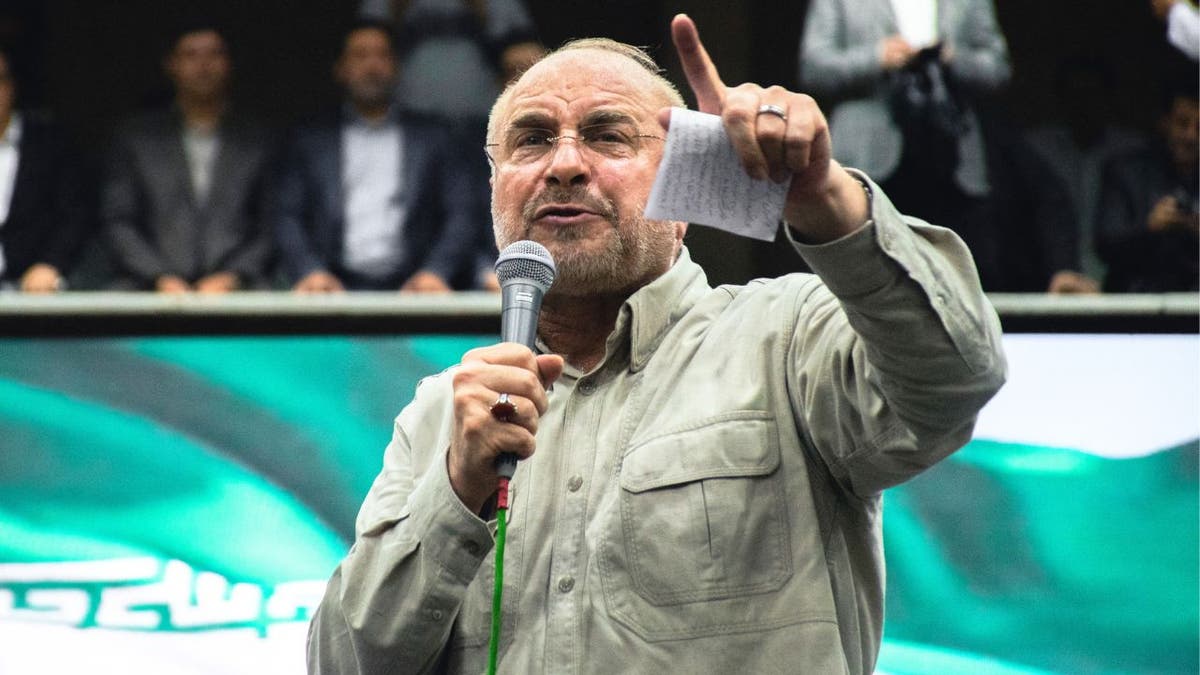
伊朗议会发言人穆罕默德·巴盖尔·哈利巴夫在2024年伊朗的一次公开活动中发言(侯赛因·贝里斯/中东图片社/法新社通过法新社)
政权内部人士
64岁的哈利巴夫是伊朗安全体系的产物。
他在两伊战争期间从伊斯兰革命卫队(IRGC)基层逐步晋升,最终成为该组织空军指挥官。
“他甚至曾在国外接受飞行训练,当时这并不罕见,据报道法国曾在某个阶段提供协助。直到最近,他仍在法国进行飞行训练,”萨蒂称。
此后,他担任伊朗国家警察局长,与卡西姆·苏莱曼尼一同负责镇压包括1999年学生起义在内的抗议活动。
进入政界后,哈利巴夫多次竞选总统失败。相反,他通过对政权的忠诚建立职业生涯,担任德黑兰市长超过十年,2020年当选议会发言人。
“哈利巴夫继续担任高级国家职务,现在是议会发言人。他始终与最高领袖保持一致,只服从指令而非提出独立主张,”萨蒂说。

“他的名字还与多起腐败指控相关,包括挪用石油收入和其家族参与的制裁规避网络。据报道,他的儿子们涉及其中并受到制裁,”萨蒂补充道,”还有关于其家人出国旅行并购买奢侈品的公开丑闻,包括广为流传的他们带着众多高端古驰行李箱抵达的照片。”
[伊朗新最高领袖是”其父的升级版”,专家警告强硬路线]
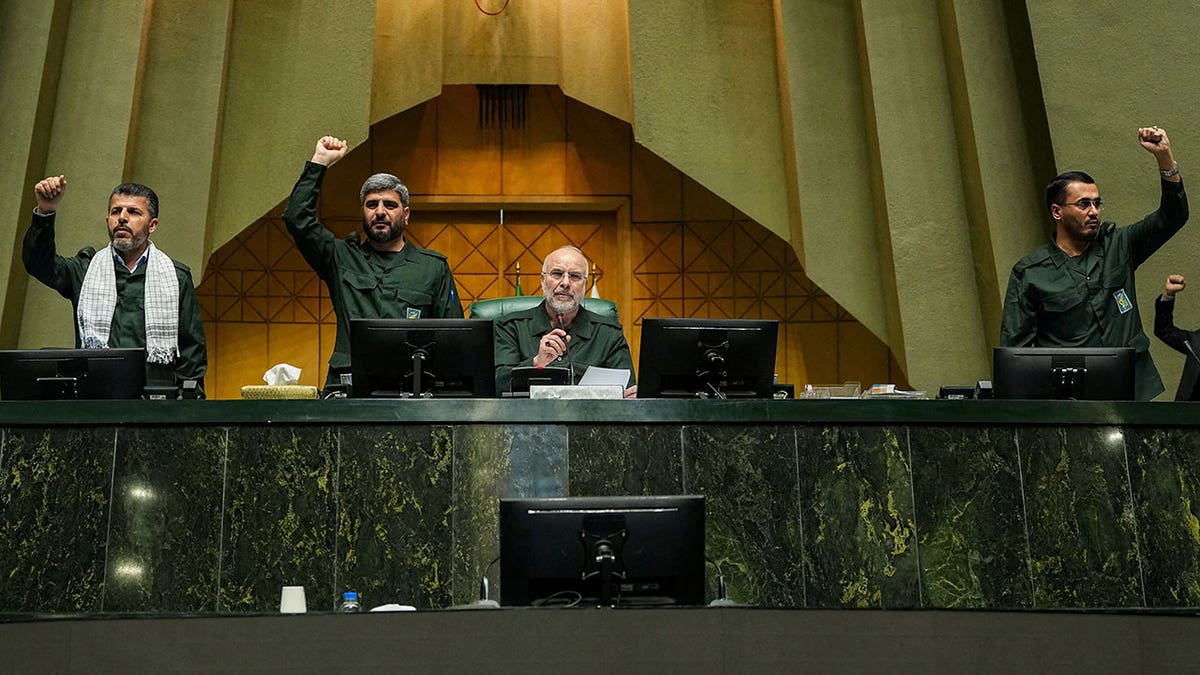
2026年2月1日,伊朗德黑兰,议会发言人穆罕默德-巴盖尔·哈利巴夫聆听议会成员高呼支持伊斯兰革命卫队的口号(哈米德·马利克普尔/伊斯兰协商会议新闻社/西亚新闻社/路透社提供)
有限的权力
哈利巴夫的战时言论反映出伊朗领导层内部立场的硬化。
他拒绝停火条件,宣称伊朗将继续战斗”直到敌人真正为其侵略行为后悔”。
他还警告称,攻击伊朗基础设施将引发地区报复,包括针对能源目标。
同时,他公开否认与美国有任何谈判,称谈判报道是”假新闻”,并指责华盛顿操纵市场。
在2026年1月12日伊朗电视台播出的讲话中,他警告称,如果美军对抗伊朗,将面临灾难性后果。”来吧,看看美国基地、舰船和部队会遭遇什么灾难,”他说,并补充说美军将”被伊朗捍卫者的火焰焚烧”。
在由中东媒体研究机构(MEMRI)播出并翻译的同段讲话中,他称美国总统”妄想且傲慢”,并将伊朗意识形态描述为正在全球蔓延的运动。
最近,他进一步升级表态。他警告称”美国士兵的鲜血是特朗普的个人责任”,并誓言伊朗将”与美国人和以色列人清算”,补充说”特朗普和内塔尼亚胡越过了我们的红线,必将付出代价”。
他还威胁要报复地区能源基础设施,表明愿意将冲突扩大到直接军事对抗之外。
并非决策者
“在当前伊朗环境中,他被认为相对温和,但他并非发号施令者。他不是领袖本人,”中东、国家安全与情报专家丹尼·西特罗维茨向福克斯新闻数字版表示,并补充称哈利巴夫可能是伊朗领导层的沟通渠道,但非最终决策者。
“如果你想与伊朗方面对话,他可能是联络点,”他说,”但他不做任何决定。即便他想做某事,也必须获得伊斯兰革命卫队和最高领导层的批准。”
萨蒂表示:”有人会提及鲁哈尼总统任期内他似乎与鲁哈尼立场一致并描述其相对温和的时期,但这是误导。”
[特朗普称伊朗想要谈判,但哈梅内伊之后谁将领导?]
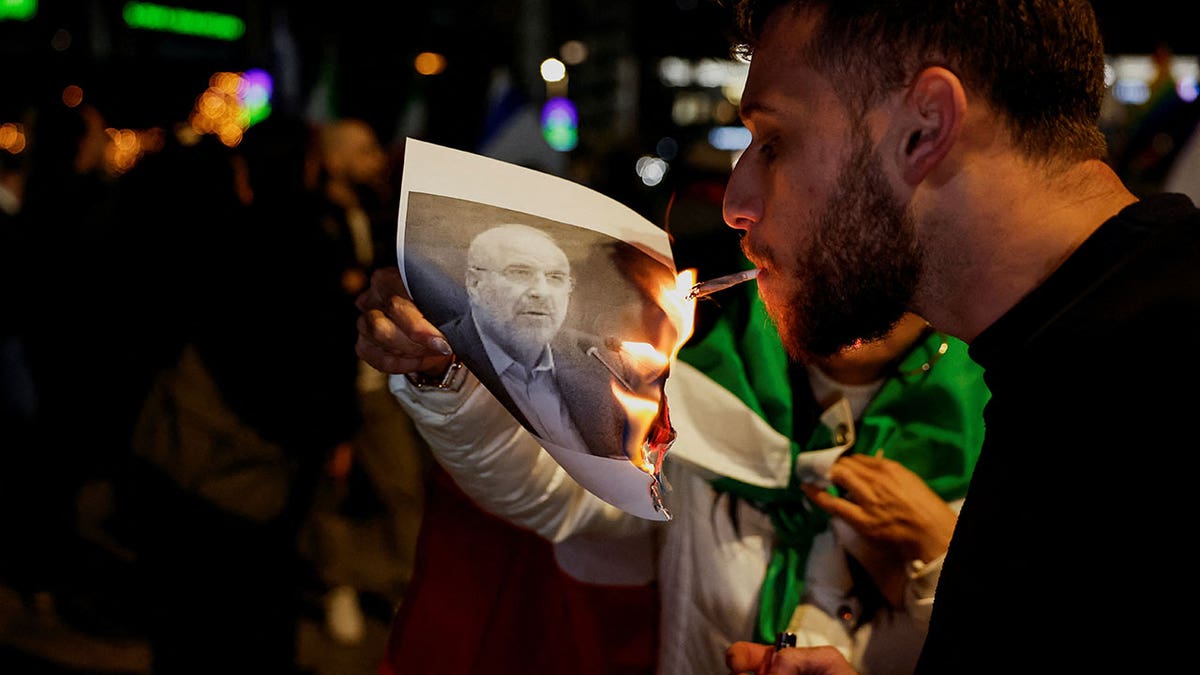
2026年1月14日,以色列霍隆,一名男子用焚烧的伊朗议会发言人穆罕默德·巴盖尔·哈利巴夫照片的火焰点燃香烟,以色列人集会支持伊朗发生的全国性抗议(阿马尔·阿瓦德/路透社)
一个难以达成协议的体系
分析师表示,更大的问题不在于哈利巴夫本人,而在于他所处的体系。
战略与国际研究中心(CSIS)的高级研究员贝赫南姆·本·塔莱布鲁说:”那些将哈利巴夫这样的伊斯兰革命卫队老兵的崛起视为其传统文职角色之外权力扩张的人,忽视了几十年来伊朗政治中驱动力是个人而非职业的事实。那些关注最高国家安全委员会中革命卫队背景成员的人也可能忽视,最近的几位秘书——沙姆哈尼、拉里贾尼和艾哈迈迪安——都有革命卫队背景。”
“今天的体系更加激进和分散,”西特罗维茨同意,”这不是一个人说了算,而是需要协调的多个行动者,这使得谈判变得更加困难。”
“我不是说不可能,因为这里仍是中东,但要与他们达成协议将非常困难,更不用说反映美国在战争前提出的相同要求了。他们绝不可能同意这一点,”他补充道。
[点击此处下载福克斯新闻应用程序]
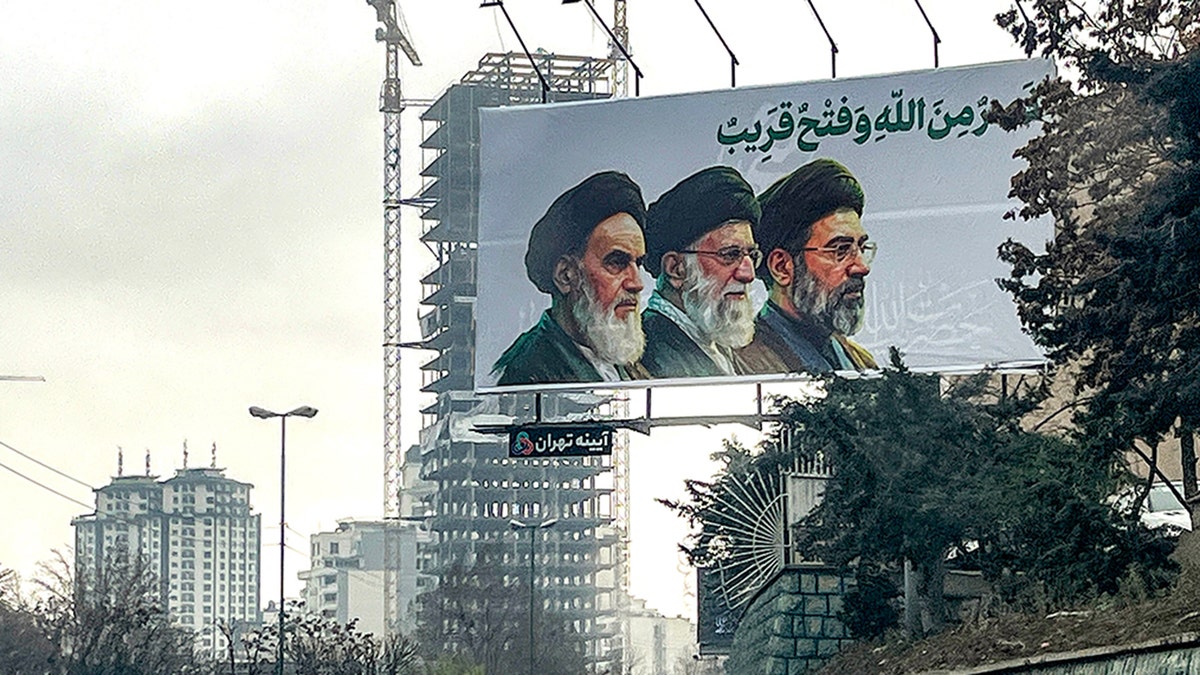
2026年3月10日,德黑兰一条高速公路上方展示着描绘伊朗最高领袖的广告牌(法新社/盖蒂图片社)
西特罗维茨表示,该政权认为自己正在获胜而非失利。”从伊朗的角度看,他们在赢,不是输。他们正在运用战略能力,有效地威胁全球经济的一个关键点——霍尔木兹海峡。这只会加剧政权内部的激进倾向。在这种情况下,将是他们而非特朗普提出要求。”
即便谈判发生,他说,没有更广泛的批准,哈利巴夫也无法代表伊朗做出承诺。
埃弗拉特·拉赫特是福克斯新闻数字版报道国际事务和联合国的外国记者。在X平台(原推特)关注她@efratlachter。故事可发送至efrat.lachter@fox.com。
The man reportedly being floated by the Trump administration as a possible interlocutor with Iran is also one of the regime’s most hardline figures — Iranian parliament speaker Mohammad Bagher Ghalibaf. The longtime Revolutionary Guards commander is widely described by experts as a loyal “yes man,” with a record of threats against the United States and deep ties to the system’s inner circle.
That contradiction underscores the central question facing U.S. policymakers: Even if Washington is speaking to the “right people,” as President Donald Trump has claimed, can someone like Ghalibaf actually deliver?
“Ghalibaf doesn’t have an independent line. His strength is that he is a ‘yes man,’” said Beni Sabti, an Iran expert at the Institute for National Security Studies. He added, “If he is told to shake hands with Special Envoy Steve Witkoff, he will do it. If he is told to escalate, he will. It is not about moderation, it is about who gives the orders.”
[AS AIRSTRIKES RAIN DOWN ON THE IRANIAN REGIME, CAN A FRACTURED OPPOSITION UNITE TO LEAD IF IT FALLS?]
Parliament Speaker Mohammad Bagher Ghalibaf speaks during a public event in Iran in 2024(Hossein Beris/Middle East Images/Middle East Images via AFP)
Regime Insider
Ghalibaf, 64, is a product of Iran’s security establishment.
He rose through the ranks of the Islamic Revolutionary Guard Corps during the Iran-Iraq War, eventually becoming commander of the IRGC air force.
“He even completed flight training abroad, which was not unusual at the time, with France reportedly assisting at one stage. Until recently, he was still conducting training flights in France,” said Sabti.
He later served as Iran’s national police chief, overseeing internal security forces responsible for suppressing protests, including the 1999 student uprising, alongside Qassem Soleimani.
After transitioning into politics, Ghalibaf attempted to run for president multiple times but failed. He instead built his career through loyalty to the system, serving as Tehran’s mayor for more than a decade before becoming speaker of parliament in 2020.
“Ghalibaf went on to serve in senior national roles and is now speaker of parliament. He has consistently aligned himself with the supreme leader and follows directives rather than setting his own independent positions,” Sabti said.
“His name has also been linked to multiple corruption allegations, including misuse of oil revenues and sanctions evasion networks involving his family. His sons have reportedly been involved and are under sanctions,” Sabti said, adding, “There have also been public scandals involving family members traveling abroad and making luxury purchases, including widely circulated images of them arriving with numerous high-end Gucci suitcases.”
[IRAN’S NEW SUPREME LEADER IS ‘HIS FATHER ON STEROIDS,’ EXPERTS WARN OF HARDLINE RULE]
Speaker Mohammad-Bagher Ghalibaf listens as parliament members chant in support of the IRGC in Tehran, Iran, Feb 1, 2026.(Hamed Malekpour/Islamic consultative assembly news agency/West Asia News Agency/Handout via Reuters)
Limited Authority
Ghalibaf’s wartime statements reflect a hardening tone inside Iran’s leadership.
He has rejected ceasefire terms, declaring Iran would continue fighting “until the enemy truly regrets its aggression.”
He has also warned that attacks on Iranian infrastructure would trigger retaliation across the region, including against energy targets.
At the same time, he has publicly denied any negotiations with the United States, calling reports of talks “fake news” and accusing Washington of manipulating markets.
In remarks aired on Iranian television on Jan. 12, 2026, he warned that U.S. forces would face catastrophic consequences if they confronted Iran. “Come, so you can see what catastrophe befalls American bases, ships and forces,” he said, adding that American troops would be “burned by the fire of Iran’s defenders.”
In the same remarks, broadcast and translated by MEMRI, he described the U.S. president as “delusional and arrogant,” and framed Iran’s ideology as a growing global movement.
More recently, he escalated further. He warned that “the blood of American soldiers is the personal responsibility of Trump,” and vowed Iran would “settle accounts with the Americans and Israelis,” adding that “Trump and Netanyahu crossed our red lines and will pay the price.”
He has also threatened retaliation against regional energy infrastructure, signaling a willingness to expand the conflict beyond direct military confrontation.
Not the Decision-Maker
“He’s considered relatively moderate in the current Iranian context, but he’s not the one calling the shots. He’s not the leader himself,” Danny Citrinowicz, Middle East, national security and intelligence expert, told Fox News Digital, adding that Ghalibaf may serve as a channel to Iran’s leadership, but not as the ultimate authority.
“If you want to speak to someone in Iran, he’s probably the point of contact,” he said. “But he’s not deciding anything. Even if he wants to do something, he has to get approval from the IRGC and the supreme leadership.”
Sabti said, “Some point to periods during Rouhani’s presidency when he appeared to align with Rouhani and describe him as somewhat moderate, but that is misleading.”
[TRUMP SAYS IRAN WANTS TO TALK BUT WHO WILL LEAD AFTER KHAMENEI?]
A man lights a cigarette with fire from a burning picture of Iranian Parliament Speaker Mohammad Bagher Ghalibaf, as Israelis rally in support of the nationwide protests happening in Iran, in Holon, Israel, Jan. 14, 2026.(Ammar Awad/Reuters)
A System That Makes Deals Harder
Analysts say the bigger issue is not Ghalibaf himself, but the system he operates within.
Behnam Ben Taleblu, a senior fellow at the Foundation for Defense of Democracies, said: “Those who see the ascendance of someone like Ghalibaf, who is an IRGC veteran, as extending power outside his traditional civilian role have missed how personality, not profession, has been the driving force in Iranian politics for decades. Those who focus on IRGC backgrounds in the Supreme National Security Council may also overlook that recent secretaries — Shamkhani, Larijani and Ahmadian — all had IRGC backgrounds.”
“The system today is more radicalized and decentralized,” Citrinowicz agreed. “It’s not one person. It’s multiple actors you need to coordinate with, which makes it much harder to negotiate.”
“I’m not saying it’s impossible, because this is still the Middle East, but it will be very difficult to reach an agreement with them, let alone one that reflects the same demands the U.S. was making before the war. There is no way they are going to agree to that,” he added.
[CLICK HERE TO DOWNLOAD THE FOX NEWS APP]
A billboard depicting Iran’s supreme leaders is displayed above a highway in Tehran on March 10, 2026.(AFP/Via Getty Images)
Citrinowicz said the regime sees themselves as prevailing. “From Iran’s perspective, they are winning, not losing. They are using their strategic capabilities and effectively threatening a choke point in the global economy, namely the Strait of Hormuz. That only reinforces the radicalization taking place inside the regime. Under those conditions, they will be the ones making demands of Trump, not the other way around.”
Even if talks were to take place, he said, Ghalibaf would not be able to commit Iran without broader approval.
Efrat Lachter is a foreign correspondent for Fox News Digital covering international affairs and the United Nations. Follow her on X @efratlachter. Stories can be sent to efrat.lachter@fox.com.
发表回复