最高法院裁决预计6月出炉
 布雷恩·德皮施、香农·布里姆、比尔·米尔斯 报道
福克斯新闻
2026年3月23日 美国东部时间下午2:40 发布
周一,美国最高法院保守派多数派似乎准备推翻密西西比州及其他允许计算选举日后收到的邮寄选票的州的法律——这一重大案件可能在2026年中期选举前数月颠覆数百万美国人的投票规则。
争议焦点是密西西比州的一项投票法律,该法律允许该州计算选举日后最多五天收到的邮寄选票,只要这些选票的邮戳日期在选举日或之前。
总统唐纳德·特朗普在其第二个白宫任期内一直关注邮寄投票,并认为此类法律会削弱选民信心。至少13个州和哥伦比亚特区目前仍有类似法律,这表明该案件具有广泛影响。

在周一大约两小时的口头辩论中,保守派大法官似乎支持特朗普政府律师、美国副检察长D.约翰·绍尔提出的论点,他指出密西西比州法律和其他州的类似投票法律可能侵蚀选民对选举结果的信任。
最高法院将审查特朗普关于出生公民权的行政命令
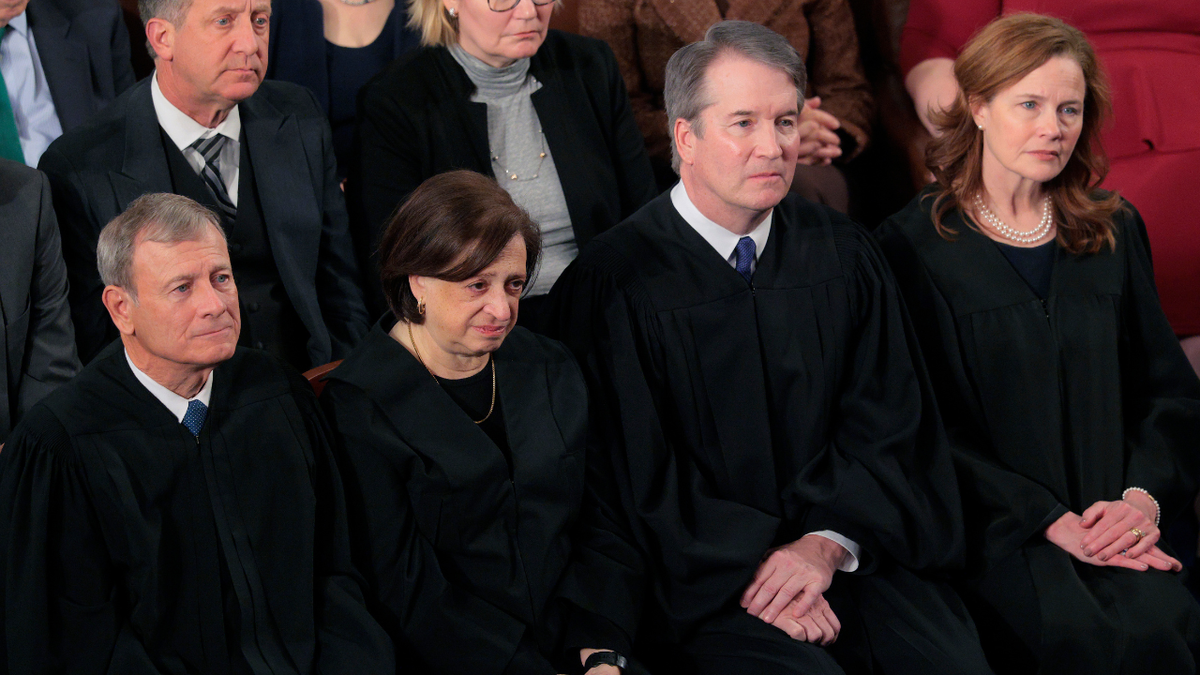
最高法院大法官出席国情咨文演讲。(Chip Somodevilla/Getty Images)
塞缪尔·阿利托大法官指出,当结果延迟时,”对选举结果的信心可能会受到严重破坏”,这一观点后来得到布雷特·卡瓦诺大法官的呼应。
“如果选举结束后的第二天早上的明显赢家因迟到的选票而最终失利,关于选举被操纵的指控可能会爆发,”卡瓦诺指出。
此案发生之际,特朗普在其第二个总统任期内针对邮寄投票工作展开了攻击。他此前签署了一项行政命令,寻求在联邦选举中结束邮寄投票,几个由共和党领导的州已经遵守。
然而,这一行动与当前最高法院的上诉案有所不同,后者围绕共和党全国委员会针对密西西比州邮寄投票法规提起的诉讼,该法规是在新冠疫情后颁布的。该法律允许邮寄选票在选举日后五天内收到。
密西西比州官员试图为其法律辩护,回应保守派大法官关于”滑坡效应”的质疑,以及其他保守派大法官提出的假设性问题,包括关于提前投票和美国海外驻军投票的问题。
最高法院暗示可能限制关键《选举权法案》裁决

这张档案照片显示,在最高法院考虑密西西比州邮寄投票法律之前,已认证的缺席选票。(AP Photo/Morry Gash, File)
“如果历史能教会我们什么,”尼尔·戈萨奇大法官指出,”那就是一旦允许某事发生,它就会发生。”
戈萨奇就各种假设性问题向律师施压,包括如果最高法院在本案中支持密西西比州,各州在推进接受邮寄选票的截止日期方面能走多远。
“如果我们裁定对你不利,有没有什么可以限制各州允许选举官员在下次国会召开当天收到选票?”戈萨奇在辩论中曾问道。
代表共和党和自由党选民进行辩论的保罗·克莱门特表示,最高法院对密西西比州的有利裁决将打开”无限可能性”的大门。
“也许下一个州可以想办法让选举中根本没有人收到任何选票,我不知道,”克莱门特说。”在我看来,这就是为什么选举日应该意味着’选举日’的重要原因。”
纽约和得克萨斯州联邦法官在最高法院裁决后阻止特朗普驱逐令
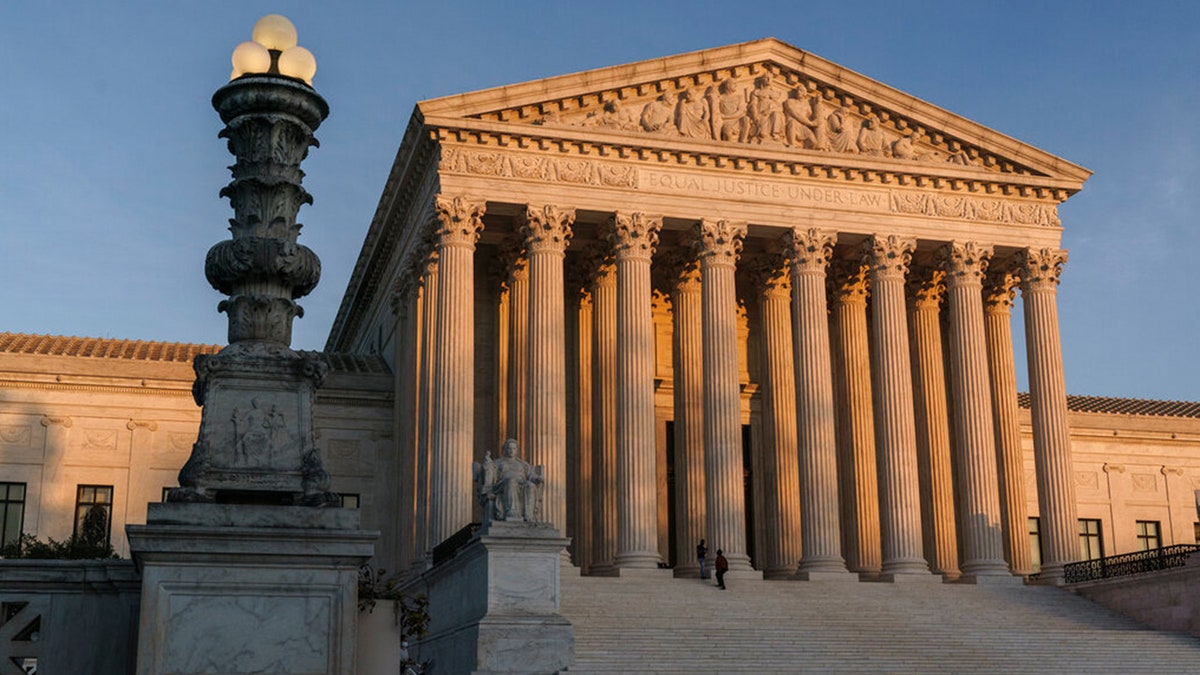
华盛顿特区的最高法院大楼。(AP Photo/J. Scott Applewhite, File)
最高法院正在考虑的这一案件,恰逢关于各州对投票法规应有多大控制权的长期法律拉锯战,包括涉及联邦和地方候选人的选举。
同时,大法官们正在权衡今年其他高风险选举案件,包括使用种族划分国会选区,以及限制政党与国会和总统候选人协调花费金额的联邦法律。
密西西比州的律师告诉法院,”选举是对官员的决定性选择……因此,联邦选举日法规只要求选民在选举日之前投票。”
“选举已经发生,即使选举官员没有在当天收到所有选票。”
点击此处获取福克斯新闻应用
最高法院预计将在6月前就各州对邮寄选票的计算问题做出裁决。
这是一则突发新闻。请继续关注更新。
布雷恩·德皮施是福克斯新闻数字版的国家政治记者,报道特朗普政府,重点关注司法部、联邦调查局和其他国家新闻。她此前曾在《华盛顿 examiner》和《华盛顿邮报》报道国家政治,还在《Politico Magazine》、《科罗拉多公报》等媒体发表文章。您可以通过Breanne.Deppisch@fox.com向她发送线索,或在X上关注她@breanne_dep。
A ruling from the high court is expected by June
By Breanne Deppisch, Shannon Bream, Bill Mears
Fox News
Published March 23, 2026 2:40pm EDT
The Supreme Court’s conservative majority on Monday appeared poised to overturn state laws from Mississippi and other U.S. states that allow for the counting of mail-in ballots received after Election Day — a major case that could upend voting laws for millions of Americans just months before the 2026 midterm elections.
At issue is a Mississippi voting law that allows the state to count mail-in ballots that are received up to five days after the election, so long as they are postmarked by or before Election Day.
President Donald Trump has focused on mail-in voting during his second White House term, and has argued that such laws undermine voter confidence. Similar laws are currently on the books for at least 13 states and the District of Columbia, in a sign of the wide-ranging nature of the case.
During roughly two hours of oral arguments Monday, conservative justices appeared sympathetic to the argument made by the Trump administration’s lawyer, U.S. Solicitor General D. John Sauer, who noted that the Mississippi law and similar voting laws in other states could erode voter trust in election results.
SCOTUS TO REVIEW TRUMP EXECUTIVE ORDER ON BIRTHRIGHT CITIZENSHIP
Supreme Court justices are seen at the State of the Union.(Chip Somodevilla/Getty Images)
Justice Samuel Alito pointed to concerns that “confidence in election outcomes can be seriously undermined” when results are delayed, which was echoed later by Justice Brett Kavanaugh.
“If the apparent winner the morning after the election ends up losing due to late arriving ballots, charges of a rigged election could explode,” Kavanaugh noted.
The case comes as Trump has targeted mail-in voting efforts in his second presidential term. He previously signed an executive order seeking to end mail-in ballots in federal elections, with which several GOP-led states have complied.
That action was separate from the current Supreme Court appeal, however, which centered on the Republican National Committee’s lawsuit brought against Mississippi over its mail-in voting statutes, enacted after the COVID-19 pandemic. The law allows mail-in voting ballots to be received up to five days after the election.
Mississippi officials sought to defend their law against questions from conservative justices regarding a “slippery slope,” and other hypothetical questions raised by conservative justices, including questions centered on early voting, and votes sent by U.S. service members stationed overseas.
SUPREME COURT SIGNALS IT MAY LIMIT KEY VOTING RIGHTS ACT RULE
Certified absentee ballots are seen in this file photo ahead of the Supreme Court’s consideration of a Mississippi mail-in voting law.(AP Photo/Morry Gash, File)
“If history teaches anything,” Justice Neil Gorsuch noted, “[it is that] as soon as anything is allowed, it will happen.”
Gorsuch pressed lawyers on various hypothetical questions, including how far states could go in pushing their own deadlines for accepting mail-in ballots, should the Supreme Court side with Mississippi in the case.
“If we were to rule against you, is there anything that would limit a state from allowing a receipt by election officials up until the day of the next Congress?” Gorsuch asked at one point during arguments.
Paul Clement, who presented arguments for the Republican Party and Libertarian voters, suggested that a high court ruling for Mississippi would open the door to “limitless” options.
“Maybe the next state can figure out a way to have an election without anybody even receiving anything, I don’t know,” Clement said. “That seems to me to be a large reason why Election Day should mean ‘Election Day.’”
FEDERAL JUDGES IN NEW YORK AND TEXAS BLOCK TRUMP DEPORTATIONS AFTER SCOTUS RULING
The Supreme Court building in Washington, D.C.(AP Photo/J. Scott Applewhite, File)
The high court’s consideration of the case comes amid a long-standing legal tug-of-war over how much control states should have over their voting regulations, including in elections involving both federal and local candidates.
It comes as justices are weighing other high-stakes election cases this year, including the use of race to draw congressional voting districts, and a federal law restricting the amount of money that political parties can spend in coordination with candidates for Congress and president.
Lawyers for Mississippi told the court that an ”election’ is the conclusive choice of an officer… So the federal Election-Day statutes require only that the voters cast their ballots by Election Day.”
“The election has then occurred, even if election officials do not receive all ballots by that day.”
CLICK HERE TO GET THE FOX NEWS APP
The high court is expected to rule on the states’ counting of mail-in ballots by June.
This is a breaking news story. Check back for updates.
Breanne Deppisch is a national politics reporter for Fox News Digital covering the Trump administration, with a focus on the Justice Department, FBI and other national news. She previously covered national politics at the Washington Examiner and The Washington Post, with additional bylines in Politico Magazine, the Colorado Gazette and others. You can send tips to Breanne at Breanne.Deppisch@fox.com, or follow her on X at @breanne_dep.
发表回复