最新的升级信号是世界最大航空母舰——美国海军”杰拉尔德·R·福特”号及其打击群从加勒比海向中东地区的移动。
此次军事集结正值华盛顿与德黑兰就伊朗有争议的核项目进行间接谈判之际。特朗普警告称,伊朗政权必须彻底拆除其核设施,否则将面临后果。

全球顶级核大国并无核武库限制,拥有核武器的国家在此

唐纳德·特朗普总统要求伊朗政权拆除其核武器计划。(Andrew Caballero-Reynolds/法新社/盖蒂图片社)
美国力量投射的核心是另一支航母打击群:”亚伯拉罕·林肯”号——一艘海上移动堡垒,由驱逐舰护航,可随时发动精确打击。甲板上,F-35战斗机和F/A-18攻击机的射程覆盖数十个伊朗关键军事和核目标。
与此同时,在地中海东部,”布尔克”号和”罗斯福”号驱逐舰提供了额外的打击能力和导弹防御覆盖,并可能协助以色列抵御伊朗任何可能的反击。
全球最大航空母舰驶向中东,伊朗核紧张局势急剧升级
由Flourish制作•创建图表
更往南,在红海,”德尔伯特·B·布莱克”号驱逐舰在全球最重要的航运通道之一增加了一层火力。红海通过苏伊士运河连接地中海和印度洋,这条走廊承载着全球大量贸易和能源供应。
美国海军在那里的驱逐舰不仅保护商业交通,还使华盛顿能够灵活应对中东与欧洲之间移动的威胁。
在更靠近伊朗海岸线的波斯湾和霍尔木兹海峡,”麦克福尔”号和”米切尔”号正在地球上战略敏感度最高的水道之一执行任务。全球约五分之一的石油每天通过霍尔木兹海峡。它们的存在表明,美国既能捍卫这个关键咽喉要道,又能在必要时从近距离打击伊朗目标。
伊朗划出导弹红线,分析师警告德黑兰在拖延与美谈判
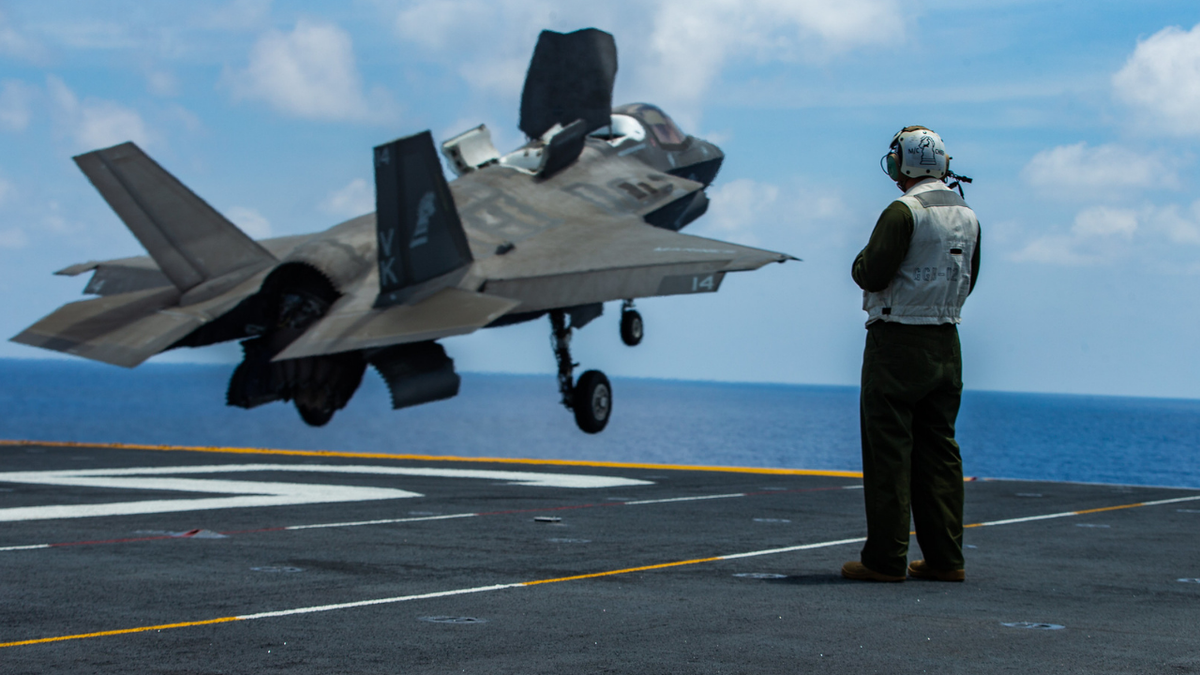
该地区的战舰配备了先进飞机,如F-35战斗机,这种喷气式飞机设计用于突破防空系统,精准打击目标。(美国海军陆战队一等兵伊萨克·坎特雷尔)
除海军部队外,美国空中力量遍布多个中东基地,使指挥官能够快速实施打击、防御和维持行动。
多种战斗机从地区基地起飞执行任务,包括F-15、F-16和具有雷达隐身能力的F-35。A-10专门执行近距离空中支援任务,打击装甲目标。
这些战斗机由一系列支援飞机提供保障。KC-135和KC-46加油机在空中为喷气式飞机加油,使它们能飞得更远、滞空时间更长。EA-18G电子战飞机可干扰敌方雷达和通讯。E-3″哨兵”飞机充当空中指挥中心,跟踪大范围区域内的威胁。P-8″波塞冬”飞机巡逻并监控海上活动。
点击此处下载福克斯新闻应用程序
此外,C-5″银河”和C-17″环球霸王”等重型运输机运送部队和装备,MQ-9″死神”无人机提供监视并可携带精确制导武器。这些资产使美国指挥官能够在空、海、陆多维度灵活作战。
综合来看,空中和海军部署形成了重叠的打击能力、导弹防御覆盖范围以及对主要海上航线的控制权。对伊朗而言,这意味着美军不会集中在一个易受攻击的地点——它们分布广泛、层层设防,并能同时从多个方向发动行动。
阿曼达为福克斯新闻数字频道报道商业与政治交叉领域新闻。
For weeks, the U.S. military has quietly amassed what President Donald Trump has described as an ‘armada’ in Iran’s backyard. Mapped out across the Persian Gulf and beyond, the deployment tells its own story — one of calculated pressure backed by credible capability.
The latest signal of escalation is the movement of the world’s largest aircraft carrier, the U.S. Navy’s USS Gerald R. Ford, and its strike group from the Caribbean toward the Middle East.
The buildup coincides with indirect negotiations between Washington and Tehran over Iran’s disputed nuclear program. Trump has warned that the regime must fully dismantle its nuclear infrastructure — or face consequences.
THE WORLD’S TOP NUCLEAR POWERS HAVE NO ARSENAL LIMITS, HERE ARE THE COUNTRIES WITH NUKES
President Donald Trump has demanded that the Iranian regime dismantle its nuclear weapons program.(Andrew Caballero-Reynolds/AFP/Getty Images)
At the heart of America’s force projection is another carrier strike group: the USS Abraham Lincoln — a mobile fortress at sea, guarded by destroyers and equipped to unleash precision strikes at a moment’s notice. On deck, F-35 fighters and F/A-18 attack aircraft sit within range of dozens of key Iranian military and nuclear targets.
Meanwhile, in the Eastern Mediterranean, the destroyers USS Bulkeley and USS Roosevelt provide additional strike capability and missile defense coverage — and could potentially assist Israel in defending against any Iranian counterattack.
WORLD’S LARGEST AIRCRAFT CARRIER HEADS TO MIDDLE EAST AS IRAN NUCLEAR TENSIONS SPIKE DRAMATICALLY
Made with Flourish•Create a chart
Farther south, in the Red Sea, the USS Delbert B. Black adds another layer of firepower along one of the world’s most important shipping lanes. The Red Sea links the Mediterranean to the Indian Ocean through the Suez Canal, a corridor that carries a significant share of global trade and energy supplies.
A U.S. destroyer there not only protects commercial traffic but also gives Washington the flexibility to respond quickly to threats moving between the Middle East and Europe.
Even closer to Iran’s coastline, in the Persian Gulf and the Strait of Hormuz, the USS McFaul and USS Mitscher are operating in one of the most strategically sensitive waterways on the planet. Roughly a fifth of the world’s oil passes through the Strait of Hormuz each day. Their presence signals that the U.S. can both defend that vital choke point and, if necessary, strike Iranian targets from close range.
IRAN DRAWS MISSILE RED LINE AS ANALYSTS WARN TEHRAN IS STALLING US TALKS
Alongside the warships in the region are advanced aircraft such as the F-35 fighter, a jet designed to slip past air defenses and hit targets with precision.(Cpl. Isaac Cantrell/U.S. Marine Corps)
Beyond naval forces, U.S. air power is spread across multiple Middle Eastern bases, giving commanders the ability to strike, defend and sustain operations quickly.
Several types of combat aircraft are operating from regional bases, including F-15s, F-16s and the radar-evading F-35. The A-10 specializes in close-air support missions against armored threats.
Those fighters are backed by a network of support aircraft. KC-135 and KC-46 tankers refuel jets midair, allowing them to fly farther and stay aloft longer. EA-18G electronic warfare aircraft can jam enemy radar and communications. E-3 Sentry aircraft serve as airborne command centers, tracking threats across wide areas. P-8 Poseidon planes patrol and monitor maritime activity.
CLICK HERE TO DOWNLOAD THE FOX NEWS APP
Additionally, heavy transports — including C-5 Galaxy and C-17 Globemaster aircraft — move troops and equipment, while MQ-9 Reaper drones provide surveillance and can carry precision weapons. The assets give U.S. commanders flexibility to operate across air, sea and land.
Taken together, the air and naval deployments create overlapping strike capability, missile defense coverage and control over major maritime routes. For Iran, it means U.S. forces are not concentrated in a single vulnerable location — they are distributed, layered and positioned to operate from multiple directions at once.
Amanda covers the intersection of business and politics for Fox News Digital.
发表回复